
A Gulf Billionaire’s Warning as the War Against Iran Collapses
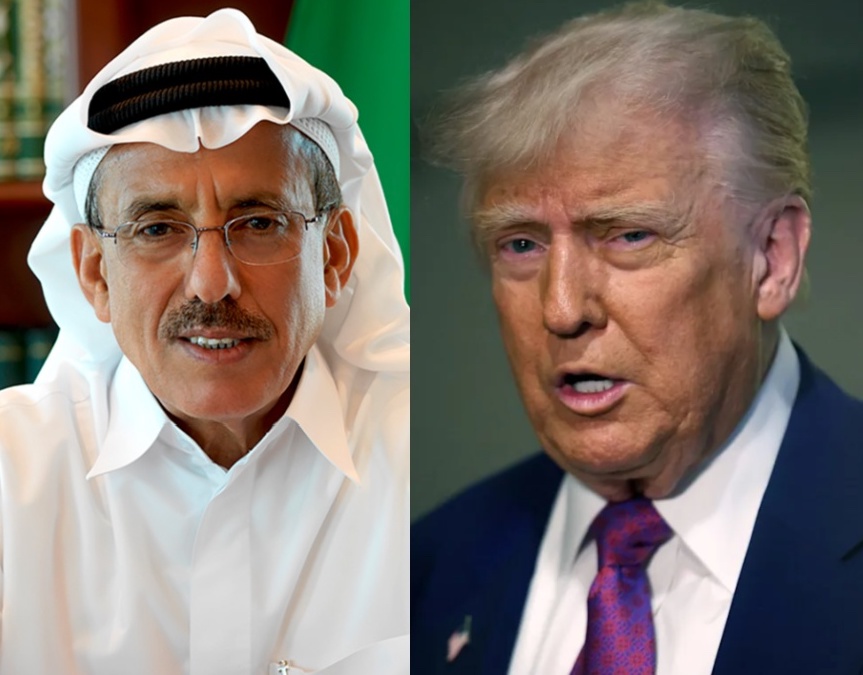
The U.S.-led war with Iran, launched just weeks ago, is already falling apart—and one of the Arab world’s most prominent businessmen has stepped forward to say what many in the region are thinking. Khalaf Ahmad Al Habtoor, described by Middle East Eye as “one of the UAE’s top businessmen,” unleashed a blistering viral attack on former President Donald Trump, accusing him of dragging the Middle East into a disastrous conflict that nobody asked for.
“Who gave you the authority to drag our region into a war with Iran? And on what basis did you make this dangerous decision? Did you calculate the collateral damage before pulling the trigger? And did you consider that the first to suffer from this escalation will be the countries of the region itself!”
Al Habtoor’s fury is not abstract. It reflects a growing and terrified consensus across the Gulf: the war is a strategic catastrophe, and its failure is becoming visible by the day. His questions go to the heart of why this campaign is crumbling—militarily, politically, and economically.
A Collapsing Military Campaign: Mounting Losses
Al Habtoor’s fear that the region would become a battlefield has been realized with brutal speed. Despite initial claims of air superiority, Iranian defenses have proven far more capable than anticipated. On April 4, Iran shot down an F-15E Strike Eagle—the first confirmed downing of a manned U.S. aircraft over Iranian territory. An A-10 Warthog was also struck in the Gulf. These losses directly contradict Trump’s boasts that Iran’s air defenses had been “annihilated.”
The human toll is climbing. As of early April 2026, 13 American service members have been killed and 365 wounded. A high-risk rescue mission for downed pilots turned into a firefight, with multiple U.S. helicopters struck by Iranian fire. The war’s financial cost is staggering: direct military operations are estimated at $40–65 billion, and the Institute for Policy Studies warns that a four-to-five-week conflict could reach $210 billion including economic impacts. As Al Habtoor pointedly reminded Trump:
“You have even broken your promises not to get involved in wars… You directed more than 658 foreign airstrikes in your first year in office, which equals the total strikes in Biden’s entire term.”
Regional Blowback: A Crisis No One Chose
Al Habtoor’s core accusation—that the Gulf states have been placed “at the heart of a danger they did not choose”—has proven tragically prophetic. In retaliation for U.S.-Israeli strikes, Iran has attacked energy infrastructure across the region. Saudi air defenses have intercepted multiple ballistic missiles, and a petrochemical complex in Jubail was hit, causing a major fire. The Strait of Hormuz, through which a fifth of the world’s oil passes, is effectively closed, stranding thousands of ships and causing billions in lost revenue.
“You have placed the countries of the #GulfCooperationCouncil and the Arab countries at the heart of a danger they did not choose,” Al Habtoor wrote. “Thank God, we are strong and capable of defending ourselves… but the question remains: Who gave you permission to turn our region into a battlefield?”
The crisis has also ruptured trust in Washington. Gulf monarchies are quietly questioning American security guarantees and looking toward China as a more stable partner. This strategic loss may outlast the war itself.

🇺🇸 Domestic Uprising: The American People Turn Away
Al Habtoor also trained his fire on the war’s unpopularity inside the United States, noting that even among Americans there is “growing concern about being dragged into a new war.” The numbers back him up. By late March 2026, 61% of Americans disapproved of Trump’s handling of the conflict, and 59% believed the decision to use military force was wrong. The “rally-around-the-flag” effect never materialized.
“Your Excellency the President, these numbers have severely reflected on your approval ratings among Americans, which have declined since your inauguration for the second term, by about 9% in just 400 days.”
Gas prices have soared as a result of the conflict, hitting American families directly. Former National Security Adviser John Bolton has suggested that Trump is in “panic mode,” desperately seeking an exit strategy. In a clear sign of a failing campaign, the administration abruptly removed senior military leaders, including the Army Chief of Staff—a move analysts called an effort to “shift responsibility for a failing war effort” from political leaders to the military.
A House Divided: Allies Question the War’s Purpose
Al Habtoor asked the most pointed question of all: “Was this your decision alone? Or did it come as a result of pressures from #Netanyahu and his government?” The answer, as even Marco Rubio has admitted, is that the conflict serves primarily Israel’s interests. But even the U.S.-Israeli alliance has shown cracks. Reports emerged that Trump blocked an Israeli plan to strike Iranian nuclear sites, revealing a divergence in strategic priorities.
Meanwhile, the U.S. finds itself increasingly isolated. Key European allies like Spain and France have expressed opposition. A UN Security Council resolution demanding the reopening of the Strait of Hormuz was vetoed by Russia and China, highlighting the erosion of American diplomatic power.
A Final Reckoning
Al Habtoor concluded his post by tagging Donald Trump’s X account with a plea that now reads like an epitaph for the war itself:
“True leadership is not measured by war decisions, but by wisdom, respect for others, and pushing toward achieving peace. And if these initiatives were launched in the name of peace, then we have the right today to demand full transparency and clear accountability.”
The billionaire threw everything he could think of at this catastrophe in the hopes of convincing Trump to back off. But he was absolutely right on all his points. The war has unilaterally plunged the Middle East into blood-soaked chaos, Trump’s approval rating is cratering, and the United States stands to gain nothing. With soaring casualties, a hostile domestic audience, a fractured international coalition, and a resilient enemy, this conflict is rapidly going down as one of the worst strategic miscalculations ever made by